Filter by
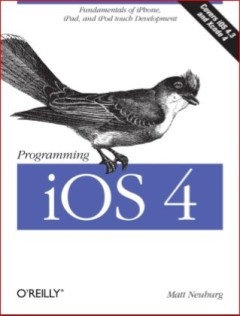
Programming iOS 4
With the advent of version 2 of the iPhone system, Apple proved they could do a re- markable thing — adapt their existing Cocoa computer application programming framework to make applications for a touch-based device with limited memory and speed and a dauntingly tiny display. The resulting Cocoa Touch framework, in fact, turned out to be in many ways better than the original Cocoa. A program…
- Edition
- -
- ISBN/ISSN
- 978-1-449-38843-0
- Collation
- 1-834
- Series Title
- -
- Call Number
- -
Programming iOS 5
With the advent of version 2 of the iPhone system, Apple proved they could do a remarkable thing — adapt their existing Cocoa computer application programming framework to make applications for a touch-based device with limited memory and speed and a dauntingly tiny display. The resulting Cocoa Touch framework, in fact, turned out to be in many ways better than the original Cocoa. A programmi…
- Edition
- -
- ISBN/ISSN
- 978-1-449-31934-2
- Collation
- 1-928
- Series Title
- -
- Call Number
- -
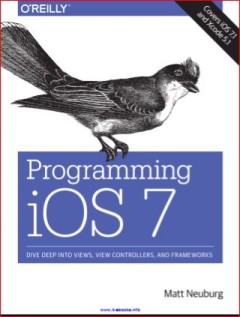
Programming iOS 7
A programming framework has a kind of personality, an overall flavor that provides an insight into the goals and mindset of those who created it. When I first encountered Cocoa Touch, my assessment of its personality was: “Wow, the people who wrote this are really clever!” On the one hand, the number of built-in interface widgets was severely and deliberately limited; on the other hand, the…
- Edition
- -
- ISBN/ISSN
- 978-1-449-37234-7
- Collation
- 1-929
- Series Title
- -
- Call Number
- -
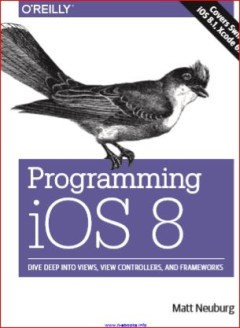
Programming iOS 8
This book is geared to iOS 8.1 and Xcode 6.1, both of which became publicly available in October, 2014. In general, only very minimal attention is given to earlier versions of iOS and Xcode. As I’ve already said, it is not my intention to embrace in this book any detailed knowledge about earlier versions of the software, which is, after all, readily and compendiously available in my earlier b…
- Edition
- -
- ISBN/ISSN
- 978-1-491-90873-0
- Collation
- 1-1017
- Series Title
- -
- Call Number
- -
 Computer Science, Information & General Works
  Philosophy & Psychology
  Religion
  Social Sciences
  Language
  Pure Science
  Applied Sciences
  Art & Recreation
  Literature
  History & Geography