Filter by
Behavioral Neurobiology of Stress-related Disorders
- Edition
- -
- ISBN/ISSN
- 978-3-662-45126-7
- Collation
- -
- Series Title
- -
- Call Number
- -
- Edition
- -
- ISBN/ISSN
- 978-3-662-45126-7
- Collation
- -
- Series Title
- -
- Call Number
- -

ADOLESCENT MEDICINE: STATE OF THE ART REVIEWS Current Psychopharmacology for …
- Edition
- -
- ISBN/ISSN
- -
- Collation
- -
- Series Title
- -
- Call Number
- -
- Edition
- -
- ISBN/ISSN
- -
- Collation
- -
- Series Title
- -
- Call Number
- -
Programming Concurrency on the JVM
You’ve promised the boss that you’ll turn the new powerful multicore pro- cessor into a blazingly fast workhorse for your application. You’d love to exploit the power on hand and beat your competition with a faster, responsive application that provides great user experience. Those gleeful thoughts are interrupted by your colleague’s cry for help—he’s run into yet another syn- chroni…
- Edition
- -
- ISBN/ISSN
- 978-1-934356-76-0
- Collation
- 1-282
- Series Title
- -
- Call Number
- -
Handbook of Clinical Rating Scales and Assessment in Psychiatry and Mental He…
- Edition
- -
- ISBN/ISSN
- 978-1-59745-387-5
- Collation
- -
- Series Title
- -
- Call Number
- -
- Edition
- -
- ISBN/ISSN
- 978-1-59745-387-5
- Collation
- -
- Series Title
- -
- Call Number
- -
Programming Drupal 7 Entities
Developing Drupal code has always been interesting and fun because the APIs change a lot between Drupal releases. Other CMS platforms have adopted a more static API approach, resulting in a much slower innovations. One such Drupal innovation has been the entity paradigm that simplified data manipulation. This enabled developers to build more powerful solutions and liberate their brains to remem…
- Edition
- -
- ISBN/ISSN
- 978-1-78216-652-8
- Collation
- 1-134
- Series Title
- -
- Call Number
- -
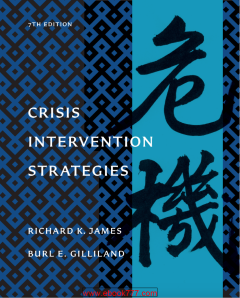
Crisis Intervention Strategies Seventh Edition
- Edition
- -
- ISBN/ISSN
- 10: 1-111-18677-4
- Collation
- -
- Series Title
- -
- Call Number
- -
- Edition
- -
- ISBN/ISSN
- 10: 1-111-18677-4
- Collation
- -
- Series Title
- -
- Call Number
- -
Couple Resilience Emerging Perspectives
- Edition
- -
- ISBN/ISSN
- 978-94-017-9909-6
- Collation
- -
- Series Title
- -
- Call Number
- -
- Edition
- -
- ISBN/ISSN
- 978-94-017-9909-6
- Collation
- -
- Series Title
- -
- Call Number
- -
Counseling and Action Toward Life-Enhancing Work, Relationships, and Identity
- Edition
- -
- ISBN/ISSN
- 978-1-4939-0773-1
- Collation
- -
- Series Title
- -
- Call Number
- -
- Edition
- -
- ISBN/ISSN
- 978-1-4939-0773-1
- Collation
- -
- Series Title
- -
- Call Number
- -
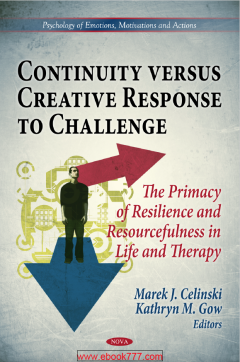
CONTINUITY VERSUS CREATIVE RESPONSE TO CHALLENGE: THE PRIMACY OF RESILIENCE A…
- Edition
- -
- ISBN/ISSN
- 978-1-61942-707-5
- Collation
- -
- Series Title
- -
- Call Number
- -
- Edition
- -
- ISBN/ISSN
- 978-1-61942-707-5
- Collation
- -
- Series Title
- -
- Call Number
- -

ConteMporary pSyChotherapieS FoR a DivERsE WoRlD
- Edition
- -
- ISBN/ISSN
- 978-0-415-89838-6
- Collation
- -
- Series Title
- -
- Call Number
- -
- Edition
- -
- ISBN/ISSN
- 978-0-415-89838-6
- Collation
- -
- Series Title
- -
- Call Number
- -
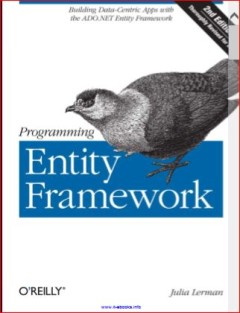
Programming Entity Framework
The early walkthroughs, which demonstrate the use of the Entity Framework in a variety of applications (Windows Forms, Windows Presentation Foundation, ASP.NET, WCF services, and WCF Data Services), are written so that you can follow them even if you have never created a particular application type before. The goal of this book is to help developers not only get up and running with the Entity F…
- Edition
- -
- ISBN/ISSN
- 978-0-596-80726-9
- Collation
- 1-91
- Series Title
- -
- Call Number
- -

CONTEMPORARY INTELLECTUAL ASSESSMENT THIRD EDITION Theories, Tests, and Issues
- Edition
- -
- ISBN/ISSN
- 978-1-60918-995-2
- Collation
- -
- Series Title
- -
- Call Number
- -
- Edition
- -
- ISBN/ISSN
- 978-1-60918-995-2
- Collation
- -
- Series Title
- -
- Call Number
- -
c o g n i t i v e - b e h a v i o r a I Group t h e r a p y FOR SPECIFIC PROB…
- Edition
- -
- ISBN/ISSN
- -
- Collation
- -
- Series Title
- -
- Call Number
- -
- Edition
- -
- ISBN/ISSN
- -
- Collation
- -
- Series Title
- -
- Call Number
- -
The Future Home is Wise, Not Smart A Human-Centric Perspective on Next Genera…
- Edition
- -
- ISBN/ISSN
- 978-3-319-23093-1
- Collation
- -
- Series Title
- -
- Call Number
- -
- Edition
- -
- ISBN/ISSN
- 978-3-319-23093-1
- Collation
- -
- Series Title
- -
- Call Number
- -

Communal Functions of Social Comparison
- Edition
- -
- ISBN/ISSN
- 978-0-521-11949-8
- Collation
- -
- Series Title
- -
- Call Number
- -
- Edition
- -
- ISBN/ISSN
- 978-0-521-11949-8
- Collation
- -
- Series Title
- -
- Call Number
- -

Cognitive Therapy for Personality Disorders
- Edition
- -
- ISBN/ISSN
- 978–0–415–41557–6
- Collation
- -
- Series Title
- -
- Call Number
- -
- Edition
- -
- ISBN/ISSN
- 978–0–415–41557–6
- Collation
- -
- Series Title
- -
- Call Number
- -
Cognitive Linguistics Convergence and Expansion
- Edition
- -
- ISBN/ISSN
- 978 90 272 8454 9
- Collation
- -
- Series Title
- -
- Call Number
- -
- Edition
- -
- ISBN/ISSN
- 978 90 272 8454 9
- Collation
- -
- Series Title
- -
- Call Number
- -

Programming Erlang
Oh no! Not another programming language! Do I have to learn yet another one? Aren’t there enough already? I can understand your reaction. There are loads of programming languages, so why should you learn another? Here are five reasons why you should learn Erlang: • You want to write programs that run faster when you run them on a multicore computer. • You want to write fault-tolerant …
- Edition
- -
- ISBN/ISSN
- 978-1-934356-00-5
- Collation
- 1-526
- Series Title
- -
- Call Number
- -
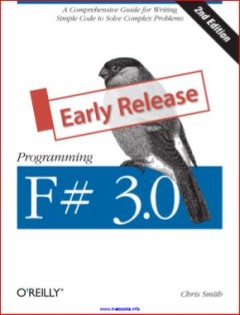
Programming F# 3.0
So what actually is F#? In a nutshell, F# is a multi-paradigm programming language built on .NET, meaning that it supports several different styles of programming natively. I’ll spare you the history of the language and instead just go over the big bullets: • F# supports imperative programming. In F# you can modify the contents of memory, read and write files, send data over the network, an…
- Edition
- -
- ISBN/ISSN
- -
- Collation
- 1-383
- Series Title
- -
- Call Number
- -
COGNITIVE ANALYTIC THERAPY FOR ADULT SURVIVORS OF CHILDHOOD ABUSE
- Edition
- -
- ISBN/ISSN
- 0-471-49160-8
- Collation
- -
- Series Title
- -
- Call Number
- -
- Edition
- -
- ISBN/ISSN
- 0-471-49160-8
- Collation
- -
- Series Title
- -
- Call Number
- -
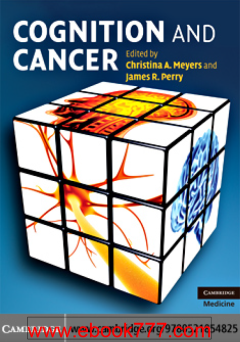
Cognition and Cancer
- Edition
- -
- ISBN/ISSN
- 978-0-511-45573-5
- Collation
- -
- Series Title
- -
- Call Number
- -
- Edition
- -
- ISBN/ISSN
- 978-0-511-45573-5
- Collation
- -
- Series Title
- -
- Call Number
- -

Clinical handbook of Couple therapy F I F T H E D I T I O N
- Edition
- -
- ISBN/ISSN
- 978-1-4625-1392-5
- Collation
- -
- Series Title
- -
- Call Number
- -
- Edition
- -
- ISBN/ISSN
- 978-1-4625-1392-5
- Collation
- -
- Series Title
- -
- Call Number
- -

Childhood Obesity in America Biography of an Epidemic
- Edition
- -
- ISBN/ISSN
- 978-0-674-28144-8
- Collation
- -
- Series Title
- -
- Call Number
- -
- Edition
- -
- ISBN/ISSN
- 978-0-674-28144-8
- Collation
- -
- Series Title
- -
- Call Number
- -

Chicana and Chicano Mental Health
- Edition
- -
- ISBN/ISSN
- 978-0-8165-2974-2
- Collation
- -
- Series Title
- -
- Call Number
- -
- Edition
- -
- ISBN/ISSN
- 978-0-8165-2974-2
- Collation
- -
- Series Title
- -
- Call Number
- -

Case Studies in Multicultural Counseling and Therapy
- Edition
- -
- ISBN/ISSN
- 978-1-118-52852-5
- Collation
- -
- Series Title
- -
- Call Number
- -
- Edition
- -
- ISBN/ISSN
- 978-1-118-52852-5
- Collation
- -
- Series Title
- -
- Call Number
- -

BUDDHISM FOR MOTHERS with Lingering Questions
- Edition
- -
- ISBN/ISSN
- 978 1 74114 907 4
- Collation
- -
- Series Title
- BUDDHISM FOR MOTHERS with Lingering Questions
- Call Number
- -
- Edition
- -
- ISBN/ISSN
- 978 1 74114 907 4
- Collation
- -
- Series Title
- BUDDHISM FOR MOTHERS with Lingering Questions
- Call Number
- -

Case Approach to Counseling and Psychotherapy
- Edition
- -
- ISBN/ISSN
- 13: 978-1-111-84176-
- Collation
- -
- Series Title
- -
- Call Number
- -
- Edition
- -
- ISBN/ISSN
- 13: 978-1-111-84176-
- Collation
- -
- Series Title
- -
- Call Number
- -
BUDDHISM FOR MOTHERS with Lingering Questions
- Edition
- -
- ISBN/ISSN
- 978 1 74114 907 4
- Collation
- -
- Series Title
- BUDDHISM FOR MOTHERS with Lingering Questions
- Call Number
- -
- Edition
- -
- ISBN/ISSN
- 978 1 74114 907 4
- Collation
- -
- Series Title
- BUDDHISM FOR MOTHERS with Lingering Questions
- Call Number
- -

Care Planning in Mental Health Promoting Recovery Second Edition
- Edition
- -
- ISBN/ISSN
- 978-0-470-67186-3
- Collation
- -
- Series Title
- -
- Call Number
- -
- Edition
- -
- ISBN/ISSN
- 978-0-470-67186-3
- Collation
- -
- Series Title
- -
- Call Number
- -
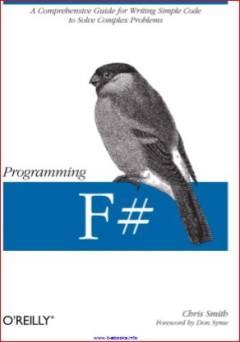
Programming F#
So what actually is F#? In a nutshell, F# is a multiparadigm programming language built on .NET, meaning that it supports several different styles of programming natively. I’ll spare you the history of the language and instead just go over the big bullets: • F# supports functional programming, which is a style of programming that em- phasizes what a program should do, not explicitly how the…
- Edition
- -
- ISBN/ISSN
- 978-0-596-15364-9
- Collation
- 1-408
- Series Title
- -
- Call Number
- -
 Computer Science, Information & General Works
  Philosophy & Psychology
  Religion
  Social Sciences
  Language
  Pure Science
  Applied Sciences
  Art & Recreation
  Literature
  History & Geography