Management
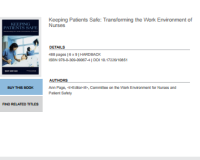
Keeping Patients Safe
This high volume of errors was recently affirmed by some with first- hand knowledge of errors—practicing physicians, patients, and their families. Fully 35 percent of practicing physicians and 42 percent of members of the American public responding to a 2002 national survey reported having experienced an error either in their own care or in that of a family member. Moreover, 18 percent of the physicians and 24 percent of the members of the public responding cited an error that had serious health consequences, including death, long-term disability, and severe pain (Blendon et al., 2002). This profusion of health care errors has received attention from federal and state policy makers, health care organizations (HCOs), individual health care practitioners, and experts on safety from a variety of disciplines. Key stimuli for this increased attention have included actions undertaken by the federal government to fund more research on why such errors occur and how to prevent them, to collect data on patient safety, to support new information technology for health care delivery, and to disseminate patient safety information to consumers and providers (Clancy and Scully, 2003).
Availability
No copy data
Detail Information
- Series Title
-
-
- Call Number
-
-
- Publisher
- : ., 2004
- Collation
-
1-485
- Language
-
English
- ISBN/ISSN
-
978-0-309-09067-4
- Classification
-
NONE
- Content Type
-
-
- Media Type
-
-
- Carrier Type
-
-
- Edition
-
-
- Subject(s)
- Specific Detail Info
-
-
- Statement of Responsibility
-
-
Other version/related
No other version available
File Attachment
Comments
You must be logged in to post a comment
 Computer Science, Information & General Works
  Philosophy & Psychology
  Religion
  Social Sciences
  Language
  Pure Science
  Applied Sciences
  Art & Recreation
  Literature
  History & Geography