Management
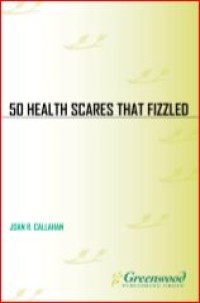
50 HEALTH SCARES THAT FIZZLED
As the title suggests, this book is about media events known as health scares that have ended (or mostly ended) not with a bang but a whimper. To “fizzle” means to end in a way that someone finds unsatisfactory. It often refers to an event or trend that holds the promise of a dramatic conclusion and then goes nowhere. A party might be said to fizzle if the guests fall asleep or go home early. The Ford Edsel is a famous example of a car that fizzled, only to be reborn as a classic. Many a child actor’s career has fizzled at puberty. In the case of a health scare, however, fizzling is more often a cause for celebration. If the latest disease outbreak or toxic exposure du jour turns out to be less dangerous than expected—or if the public and the news media simply lose interest, irrespective of actual risk—then the scare fizzles. But even a false alarm may cause a great deal of fuss and expense that often requires a scapegoat, such as a government agency that acted on the best information available at the time, or the scientists who reported preliminary study findings and lived to eat them.
Availability
No copy data
Detail Information
- Series Title
-
-
- Call Number
-
-
- Publisher
- : ., 2011
- Collation
-
1-380
- Language
-
English
- ISBN/ISSN
-
978–0–313–38538–4
- Classification
-
NONE
- Content Type
-
-
- Media Type
-
-
- Carrier Type
-
-
- Edition
-
-
- Subject(s)
- Specific Detail Info
-
-
- Statement of Responsibility
-
-
Other version/related
No other version available
File Attachment
Comments
You must be logged in to post a comment
 Computer Science, Information & General Works
  Philosophy & Psychology
  Religion
  Social Sciences
  Language
  Pure Science
  Applied Sciences
  Art & Recreation
  Literature
  History & Geography