Banking And Finance
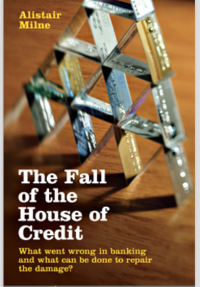
The Fall of the House of Credit
Why would anyone who does not work in the banking industry want to read a book about banking? The subject should be a bore. Savings accounts are not fashionable. Mortgages do not entertain. Most of us – well, apart from banking professionals and a few banking professors like myself – have better things to do than think about payment cards or credit transfers. All we want from banks is security and convenience: we want to trust them as the best place to keep our money and to be able to use our money without difficulty, so we can enjoy the things we desire – say a new car, a well-earned holiday, a restaurant meal, the latest DVD or the new jacket that has caught our eye. Some of us also want to be able to borrow reasonable amounts of money at not too great a cost and others – those with some cash to spare – are interested in the return that banks offer on savings. But even interest rates on bank borrowing and lending are only of passing interest, at those times when we have financial decisions to make.
Today, though, banking is attracting unusual attention. The reason is, of course, that banks are in deep trouble. Far from being boring, banks now arouse strong emotions: shock, confusion, anger and fear. Trust in banks has evaporated. Are they safe? How did they get into such difficulties? Who is responsible for their problems? How can we best prevent these spilling over into lost jobs and lower income and financial problems for all of us?
The problems originated with the bubble in US house prices, but have since turned into a global banking and financial crisis more severe than any since the 1930s. This is now producing such a sharp reversal of bank lending – the ‘fall of the house of credit’ referred to in my title – that the world is now facing the deepest and longest-lasting economic contraction since the great depression of the 1930s.
Availability
No copy data
Detail Information
- Series Title
-
The Fall of the House of Credit
- Call Number
-
-
- Publisher
- USA : Cambridge University Press., 2009
- Collation
-
1-382
- Language
-
English
- ISBN/ISSN
-
13 978-0-511-59040-5
- Classification
-
NONE
- Content Type
-
-
- Media Type
-
-
- Carrier Type
-
-
- Edition
-
1st Edtion
- Subject(s)
- Specific Detail Info
-
-
- Statement of Responsibility
-
-
Other version/related
No other version available
File Attachment
Comments
You must be logged in to post a comment
 Computer Science, Information & General Works
  Philosophy & Psychology
  Religion
  Social Sciences
  Language
  Pure Science
  Applied Sciences
  Art & Recreation
  Literature
  History & Geography