Filter by
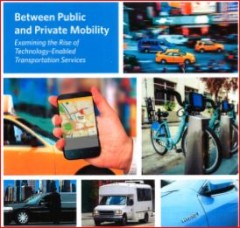
TRB Special Report 319: Between Public and Private Mobility: Examining the R…
nformation and communication technologies, combined with smartphone applications and location data from global positioning systems, are making feasible transportation services that have long been imagined but never realized on a large scale. These innovations include carsharing; bikesharing; microtransit services; and, most notably, transportation network companies (TNCs) such as Uber and Lyft.…
- Edition
- -
- ISBN/ISSN
- 978-0-309-36964-0
- Collation
- 1-125
- Series Title
- -
- Call Number
- -
Application of Enterprise Risk Management at Airports
- Edition
- -
- ISBN/ISSN
- -
- Collation
- 1-73
- Series Title
- -
- Call Number
- -
- Edition
- -
- ISBN/ISSN
- -
- Collation
- 1-73
- Series Title
- -
- Call Number
- -
NCFRP Report 16: Preserving and Protecting Freight Infrastructure and Routes
- Edition
- -
- ISBN/ISSN
- ISBN 978-0-309-27789
- Collation
- -
- Series Title
- -
- Call Number
- -
- Edition
- -
- ISBN/ISSN
- ISBN 978-0-309-27789
- Collation
- -
- Series Title
- -
- Call Number
- -
ACRP Report 58: Airport Industry Familiarization and Training for Part-Time A…
- Edition
- -
- ISBN/ISSN
- ISBN 978-0-309-27736
- Collation
- -
- Series Title
- -
- Call Number
- -
- Edition
- -
- ISBN/ISSN
- ISBN 978-0-309-27736
- Collation
- -
- Series Title
- -
- Call Number
- -

NCFRP Report 8: Freight-Demand Modeling to Support Public-Sector Decision Making
- Edition
- -
- ISBN/ISSN
- ISBN 978-0-309-27589
- Collation
- -
- Series Title
- -
- Call Number
- -
- Edition
- -
- ISBN/ISSN
- ISBN 978-0-309-27589
- Collation
- -
- Series Title
- -
- Call Number
- -
SHRP 2 Report S2-R16-RR-1: Strategies for Improving the Project Agreement Pr…
- Edition
- -
- ISBN/ISSN
- ISBN 978-0-309-27582
- Collation
- -
- Series Title
- -
- Call Number
- -
- Edition
- -
- ISBN/ISSN
- ISBN 978-0-309-27582
- Collation
- -
- Series Title
- -
- Call Number
- -

TRB Special Report 318: Modernizing Freight Rail Regulation
- Edition
- -
- ISBN/ISSN
- ISBN 978-0-309-36906
- Collation
- -
- Series Title
- -
- Call Number
- -
- Edition
- -
- ISBN/ISSN
- ISBN 978-0-309-36906
- Collation
- -
- Series Title
- -
- Call Number
- -
NCHRP Synthesis 342: Chip Seal Best Practices
A chip seal consists of a layer of asphalt binder that is overlaid by a layer of embedded aggre- gate that furnishes, among other things, protection to the asphalt layer from tire damage and a macrotexture that creates a skid-resistant surface on which vehicles may safely pass. A chip seal’s main purpose is to seal the fine cracks in a pavement’s surface and prevent water intru- sion into …
- Edition
- -
- ISBN/ISSN
- 978-0-309-26966-7
- Collation
- 1-121
- Series Title
- -
- Call Number
- -
NCHRP Report 545: Analytical Tools for Asset Management
- Edition
- -
- ISBN/ISSN
- ISBN 978-0-309-27000
- Collation
- -
- Series Title
- -
- Call Number
- -
- Edition
- -
- ISBN/ISSN
- ISBN 978-0-309-27000
- Collation
- -
- Series Title
- -
- Call Number
- -
Performance Measures and Targets for Transportation Asset Management
Asset management and performance measurement are topics of strong interest in the transporta- tion community today. NCHRP Project 20-60 looks to the strengths of both of these concepts in con- sidering what performance measures are best to apply within an asset management context. In doing this the study considers implications of several relevant trends now influencing U.S. trans- portation in…
- Edition
- -
- ISBN/ISSN
- 978-0-309-27079-3
- Collation
- 1-182
- Series Title
- -
- Call Number
- -
NCHRP Report 551: Performance Measures and Targets for Transportation Asset M…
- Edition
- -
- ISBN/ISSN
- ISBN 978-0-309-27079
- Collation
- 1-185
- Series Title
- -
- Call Number
- -
- Edition
- -
- ISBN/ISSN
- ISBN 978-0-309-27079
- Collation
- 1-185
- Series Title
- -
- Call Number
- -

A Handbook for Addressing Water Resource Issues Affecting Airport Development…
As the aviation industry evolves in response to societal changes including air travel demand, con- tinued implementation of airport development projects is a virtual certainty. Airport development projects are undertaken for a wide variety of reasons, ranging from the replacement of aging infra- structure to the need for additional capacity. Implementing an airport development project can be a …
- Edition
- -
- ISBN/ISSN
- 978-0-309-27716-7
- Collation
- 1-172
- Series Title
- -
- Call Number
- -
Modernizing Freight Rail Regulation
Congress called on the U.S. Department of Transportation (USDOT) to sponsor this study of the U.S. freight railroad industry’s economic regulation, including its purpose and performance in ensuring that railroads can earn enough revenue to continue to operate and invest and that rail shippers can obtain adequate service at reasonable rates.1 The study charge specifically calls for recommenda…
- Edition
- -
- ISBN/ISSN
- 978-0-309-36906-0
- Collation
- 1-279
- Series Title
- -
- Call Number
- -
Preserving and Protecting Freight Infrastructure and Routes
NCFRP Report 16 is the final report of NCFRP Project 24, “Preserving and Protecting Freight Infrastructure and Routes” (FY 2009). The purpose of this project was to provide practical tools to preserve and protect freight facilities and corridors. This report • Presents information about freight transportation and its importance to everyday life; • Illustrates types of conflicts between…
- Edition
- -
- ISBN/ISSN
- 978-0-309-27789-1
- Collation
- 1-95
- Series Title
- -
- Call Number
- -
Airport Industry Familiarization and Training for Part-Time Airport Policy Ma…
The administration and governance of an airport can prove quite challenging to a newly appointed policy maker or an airport manager without previous airport experience. While many serving in these roles possess some aviation experience or business background, few assume these positions with a broad understanding of the myriad of issues that affect the operation, maintenance, and development of …
- Edition
- -
- ISBN/ISSN
- 978-0-309-27736-5
- Collation
- 1-63
- Series Title
- -
- Call Number
- -
Feasibility of a Consolidated Security Credential for Persons Who Transport H…
The safe transport of hazardous materials (HazMat) throughout America’s transporta- tion infrastructure (to include points of origin and destination) is imperative to a safe and economically robust society. The security of the nation’s HazMat freight in all transporta- tion modes relies on a layered, multi-faceted security program. This comprehensive system is a constant monitor of the many…
- Edition
- -
- ISBN/ISSN
- 978-0-309-27705-1
- Collation
- 1-88
- Series Title
- -
- Call Number
- -
Guide to Improving Capability for Systems Operations and Management
The purpose of this guide is to support transportation agencies in developing institu- tional arrangements suitable to the special demands of congestion management, now emerging as a new transportation agency priority. In particular, the strategy conven- tions appropriate to effective management of nonrecurring congestion (NRC) present new challenges for agency policy, organization and staffing…
- Edition
- -
- ISBN/ISSN
- 978-0-309-27653-5
- Collation
- 1-61
- Series Title
- -
- Call Number
- -
Implementing Race-Neutral Measures in State Disadvantaged Business Enterprise…
As state departments of transportation (DOTs) carry out their highway construction programs, they are required by the U.S.DOT to direct a portion of their federal-aid fund expenditures toward small businesses called Disadvantaged Business Enterprises (DBEs). A DBE is defined as a small, for-profit business concern that is at least 51% owned and controlled by one or more socially and economica…
- Edition
- -
- ISBN/ISSN
- 978-0-309-27645-0
- Collation
- 1-97
- Series Title
- -
- Call Number
- -
Road Pricing: Public Perceptions and Program Development
The transportation system in the United States faces a number of significant challenges, includ- ing inadequate funding, persistent traffic congestion, and associated problems related to pollution, global climate change, sustainable energy, and neighborhood and community quality of life in an automobile-oriented society. As governments attempt to cope with these pressing issues, the concept …
- Edition
- -
- ISBN/ISSN
- 978-0-309-27632-0
- Collation
- 1-147
- Series Title
- -
- Call Number
- -
Freight-Demand Modeling to Support Public-Sector Decision Making
The private sector is largely responsible for development and management of the nation’s freight flow system, but public agencies at all levels face important investment and policy decisions that may affect those flows. Decisionmakers need to understand the large and shifting increases in traffic generated, for example, by ports, inland terminals, and mega- destination centers. In 2004, U.…
- Edition
- -
- ISBN/ISSN
- 978-0-309-27589-7
- Collation
- 1-68
- Series Title
- -
- Call Number
- -
Strategies for Improving the Project Agreement Process between Highway Agenci…
North American railroads and public highway departments interact thousands of times annually as the highway agencies conduct projects that cross over, under, or parallel to the railways. Each interaction requires a thorough review of the safety, engineering, and operating effects that the project will have on the railroad during construction and for decades thereafter. Although most of these re…
- Edition
- -
- ISBN/ISSN
- 978-0-309-27582-8
- Collation
- 1-187
- Series Title
- -
- Call Number
- -
Aviation Workforce Development Practices
A workforce of trained, skilled professionals is essential to the health and growth of the aviation industry. In addition to the labor needs of the nation’s air carriers and air traffic control workforce, thousands of the nation’s airports and hundreds of aviation companies are in need of a wide range of talent to perform a wide variety of functions, from fundamental operations tasks to fi…
- Edition
- -
- ISBN/ISSN
- 978-0-309-27512-5
- Collation
- 1-46
- Series Title
- -
- Call Number
- -
A Synthesis of Highway Practice
Performance-Based Maintenance Contracting (PBMC) was first implemented on a wide scale in British Columbia and since then has become a mainstay of maintenance contracting in Australia, New Zealand, England, and Finland, and to an increasing degree in other countries, including the United States. State leaders in this area include Virginia, Texas, and Florida. Not every state and every country …
- Edition
- -
- ISBN/ISSN
- 978-0-309-27411-1
- Collation
- 1-118
- Series Title
- -
- Call Number
- -
NCHRP Report 545: Analytical Tools for Asset Management
NCHRP Project 20-57 was undertaken to provide new analytical tools to support asset management. The project’s research objectives emphasized the need for tools that help agencies to make difficult tradeoff decisions for resource allocation while con- sidering asset preservation concerns and the broader set of policy objectives (e.g., mobility, safety, and economic development) that must be ta…
- Edition
- -
- ISBN/ISSN
- 978-0-309-27000-7
- Collation
- 1-72
- Series Title
- -
- Call Number
- -
MULTIMODAL TRANSPORTATION PLANNING DATA
This report presents background material on the assessment of transportation planning data needs, data organization, a procedure for prioritizing data collection and data integration requirements among planning agencies. This material has been analyzed and condensed in a separate Guidance Manual for Coordinating Transportation Planning Data. A separate Compendium of Data Collection Practices an…
- Edition
- -
- ISBN/ISSN
- -
- Collation
- 1-198
- Series Title
- -
- Call Number
- -
 Computer Science, Information & General Works
  Philosophy & Psychology
  Religion
  Social Sciences
  Language
  Pure Science
  Applied Sciences
  Art & Recreation
  Literature
  History & Geography